

Content marketing is getting squeezed from both sides: competition in organic search keeps rising, and AI Overviews are sitting on top of the SERP for more and more informational queries. Several studies across 2024 and 2025 show that AI Overviews can reduce organic clicks by anywhere from roughly 18 percent to over 60 percent on some informational terms unless your pages are included in the citations.
At the same time, brands that treat content marketing as a real system continue to win. Recent research shows that content marketing leaders drive up to 7.8 times more site traffic than non-leaders, and that content marketing often produces three times more leads at lower cost than traditional tactics.
The pattern behind most of those winners is simple: they are not publishing random blog posts. They are building content hubs and topic clusters that:
- Make it easy for search engines to understand topical authority
- Earn featured snippets and AI citations
- Move visitors from informational searches to qualified leads
This guide is a practical playbook for using content hubs, topic clusters, internal linking and schema to make your content marketing work in an AI-driven SEO world.
We will cover:
- What content hubs and topic clusters actually are
- How AI Overviews, featured snippets and SERP elements change your content strategy
- How to design a hub and spoke architecture for your core topics
- Internal linking, schema and on-page patterns that support AI and SEO
- A 90 day plan to launch or rebuild a content hub that can rank and convert
What Is a Content Hub: From Random Articles to Topic Clusters
Search engines have been moving toward topical authority for years. Topic clusters and hub-and-spoke architectures are simply ways to structure your content marketing around that idea.
Content hubs and topic clusters in plain language
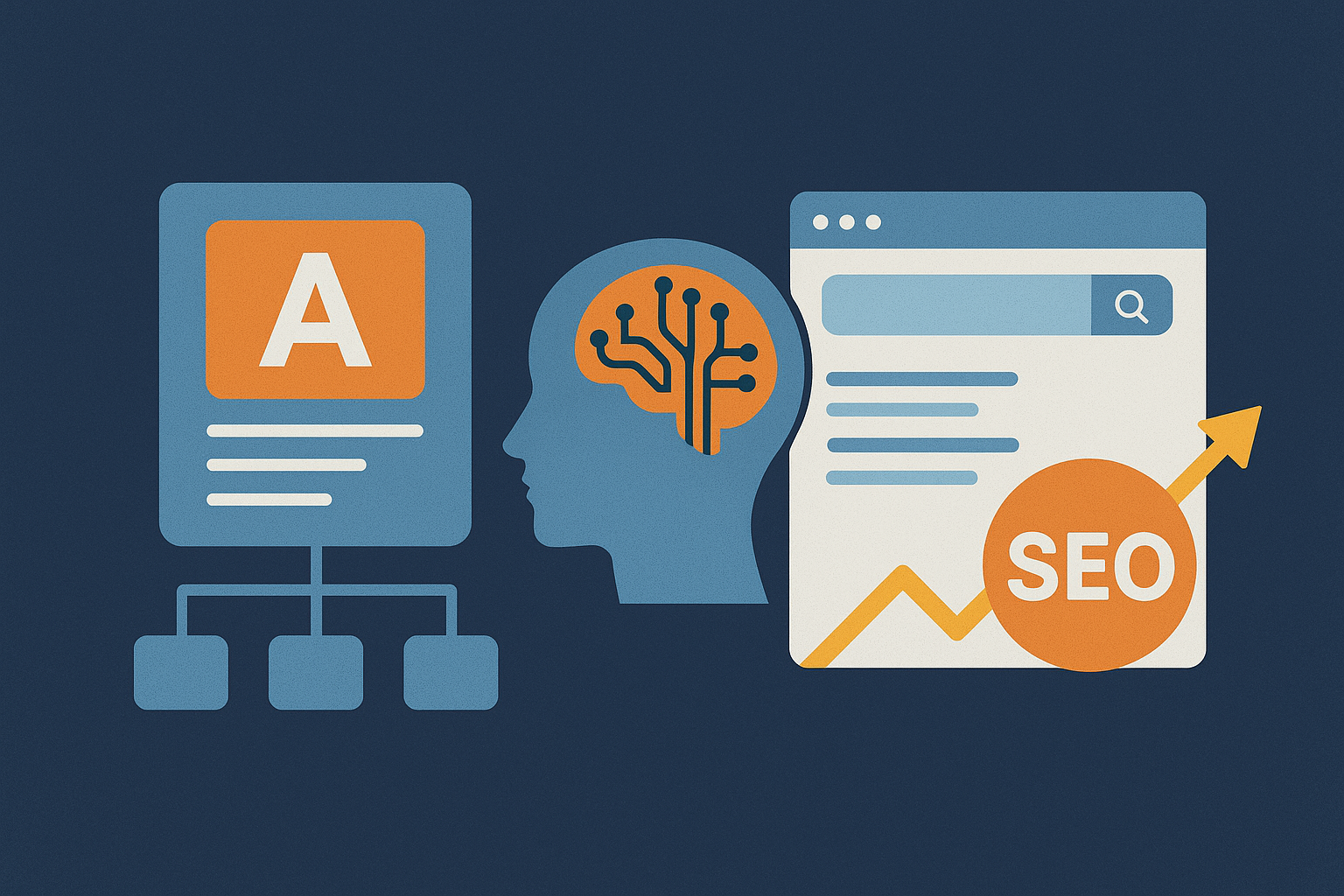
A topic cluster is a group of pages that cover one broad subject in depth: one comprehensive pillar page or hub targets the main topic, and multiple cluster pages or spokes cover specific subtopics. All of them are tightly interlinked.
Think of it like this:
- The hub answers: “Everything you need to know about [topic]”
- Each cluster page answers: “One focused question inside that topic”
- Internal links and schema help search engines understand the relationship
Examples:
- Hub: “Content Marketing Strategy: Complete Guide”
- Cluster pages: “Content Calendar Template”, “How to Write a Content Brief”, “Blog SEO Checklist”, “Content Distribution Channels”
- Hub: “Local SEO Guide”
- Cluster pages: “Google Business Profile Optimization”, “Local Link Building Ideas”, “Service Area Page Structure”, “Local Reviews Playbook”
This structure helps search engines understand that you are not just publishing sporadic content: you are an authoritative source on the subject. Guides from multiple SEO platforms consistently show that topic clusters improve rankings, internal relevance and user experience.
Why Content Hubs Matter More in the Age of AI Overviews
AI Overviews and similar “answer boxes” are increasingly sitting on top of traditional organic listings. Meta-analyses across several independent studies show three important patterns:
- AI Overviews appear most often for informational, long-tail queries
- They frequently reduce click-through rates for traditional organic results unless your site is included in the cited sources
- They tend to favor pages that already rank well or demonstrate clear topical authority and structured answers
At the same time, featured snippets and other rich results still matter:
- Research suggests that results with featured snippets can outperform regular listings for click-through and visibility, and that a large share of voice searches return snippets.
In other words:
- If you publish isolated articles: you are more likely to be displaced by AI answers
- If you build structured hubs and clusters: you are more likely to be cited by AI Overviews, win featured snippets, and still capture qualified traffic
Your content marketing strategy needs to adapt: you are writing not just for traditional SEO, but for AI-powered answer engines that evaluate context and relationships between pages.
Designing a Topic Cluster: Choose the Right Hubs
Many teams go wrong before they write the first word: they pick the wrong hub topic. A good hub supports both search demand and business demand.
Use this simple three-part filter.
1. Business fit
Your hub topic should map to:
- A core product or service line
- A problem that your best customers consistently face
- A journey where content can actually influence decision making
For example, for a B2B SaaS brand, “content marketing” or “sales enablement content” might be better hubs than broad themes like “marketing” or “growth” that are too wide to own.
2. Search demand and SERP shape
Look at your core topic in a trusted SEO tool and in live search results:
- Are there multiple related subtopics with search volume that you can build cluster pages around?
- Is the SERP dominated by one or two mega-sites, or is there room for a specialized brand with strong topical authority?
- Are there featured snippets, People Also Ask boxes, or AI Overviews where structured content could earn citations?
Recent CTR studies show that the first organic result still captures a very large share of clicks plus additional visibility if it owns a snippet or rich result. That is the opportunity you are aiming for with your hubs.
3. Depth potential
A strong hub has at least:
- One comprehensive pillar page idea that can reasonably reach 3,000 to 6,000 words of useful content
- Ten to thirty supporting cluster topics that deserve stand-alone pages: how-to guides, frameworks, case studies, tools, FAQs
If you cannot list at least ten meaningful subtopics from memory, you probably want a narrower or different hub.
Anatomy of a High-Performing Content Hub Page
Your hub or pillar page is not just “a long blog post”. It is a conversion-ready, structured resource that supports AI and SEO.
Use this checklist as a blueprint.
1. Clear topical focus and search intent
- Target one broad but specific query: “Content Marketing Strategy”, “Customer Onboarding Guide”, “Email Marketing for Ecommerce”
- Align the page with one primary intent: usually informational with strong commercial tie-ins
2. Structured sections and scannable layout
- H1: matches the main topic and clarifies value
- Intro: sets expectations and positions who the guide is for
- H2 sections that map to key subtopics in a logical order
- A persistent table of contents so readers and crawlers can navigate easily
Guides from SEO platforms and content marketing leaders show that well structured, scannable content tends to perform better in both rankings and user engagement.
3. Intentional internal links
- Each major section should link to a relevant cluster page for deeper detail
- Use descriptive anchor text that reflects actual search queries
- Include a “Related resources” block that surfaces key cluster content and tools
Internal linking is one of the most controllable ways to signal content relationships and improve crawl paths.
4. Schema and structured data
To compete for featured snippets and AI citations, pair your content architecture with schema where relevant:
- FAQ schema for common questions inside the hub
- HowTo schema for step-by-step processes
- Article or WebPage schema with rich metadata
Several studies of featured snippets and rich results indicate that a significant portion of snippet-earning pages include structured data, even though schema itself is not a guarantee.
5. Conversion paths
Your hub is also part of your content marketing funnel:
- Add inline CTAs that align with the topic: checklists, templates, calculators, demo offers
- Use middle-of-funnel offers: strategy sessions, audits, or assessments connected to the hub theme
- Make it easy for visitors to move from consuming information to starting a conversation
Building Cluster Content: Spokes That Actually Support the Hub
If the hub is the map, cluster pages are the detailed zoom-ins. They should be more than “extra blogs”.
Three main types of cluster pages
You can build clusters from three categories of content:
- Definition and fundamentals
- “What Is Content Marketing Attribution”
- “What Is a Content Brief”
- How-to and process content
- “How to Build a Content Calendar in 60 Minutes”
- “How to Map Keywords to Every Stage of the Funnel”
- Proof and tools
- Case studies and success stories
- Templates and calculators
- Industry-specific playbooks
Each cluster page should:
- Target a distinct, focused keyword or question
- Answer that question fully on its own
- Link back to the hub with clear context
- Link sideways to 1–3 sibling cluster pages where it is natural
This structure helps search engines and AI systems see your site as a dense, coherent graph around your hub topic, not a collection of disconnected posts.
Internal Linking Strategy: Turn Your Hubs Into a Graph
Internal links are the connective tissue of your content marketing system. For AI and SEO, think of them as signals of meaning and priority.
Principles for internal linking inside a hub
- Hub to cluster: The hub should link to every cluster page at least once, usually from a relevant section.
- Cluster to hub: Every cluster page should link back to the hub in the intro or conclusion.
- Cluster to cluster: Link related clusters using descriptive anchors like “content marketing KPIs”, “blog SEO checklist”, or “AI content governance”.
- Limit navigation clutter: Keep main nav clean so your signal pages get more meaningful internal equity.
Guides on hub-and-spoke SEO repeatedly show that this type of architecture improves topical authority and indexing.
Anchor text and AI Overviews
AI systems read anchor text and surrounding context to understand entities and relationships:
- Use anchors that reflect how people search, not just your brand language
- Include nouns and verbs that match intent: “build a content hub”, “content marketing funnel examples”
- Avoid generic anchors like “click here” or “read more” when you can be specific
Done correctly, your internal links turn the site into a knowledge graph for your core topics, which is exactly the type of structure AI systems prefer to reference.
Measurement: Content Hub KPIs in an AI-Driven SERP
To justify content marketing and refine your hubs, you need a focused measurement set.
For each hub and cluster, track:
- Visibility metrics: rankings, impressions, and presence in featured snippets or AI Overviews where tools allow you to see them
- Engagement metrics: scroll depth, time on page, clickthrough to cluster pages
- Conversion metrics: downloads, demo requests, consultations, assisted revenue
Content marketing research shows that brands that treat content as a measurable growth lever are far more likely to attribute increased leads and revenue to their programs.
The point is not perfection: it is to see whether your hubs are:
- Gaining visibility for the right queries
- Moving visitors deeper into your cluster
- Contributing to pipeline and revenue
90 Day Content Hub Launch Plan
Here is a practical, time-bound plan for building or rebuilding one content hub.
Weeks 1–2: Strategy and mapping
- Choose one hub topic with strong business fit and realistic search opportunity
- List at least 15–30 cluster ideas from intent research and customer conversations
- Map each cluster to:
- Primary keyword or question
- Funnel stage
- Target audience segment
- Define your conversion assets for this hub: lead magnets, offers, or tools
Weeks 3–6: Build the spine
- Draft and publish your hub page first: even if some sections are “coming soon”, get the spine live
- Publish 3–5 high impact cluster pages that answer the most important questions
- Implement internal linking between hub and initial clusters
- Add schema where relevant: FAQ, HowTo, Article
- Set up a simple dashboard: impressions, clicks, rankings, conversions for hub and clusters
Weeks 7–12: Fill in and optimize
- Publish 1–2 new cluster pages per week, prioritizing search volume and commercial value
- Optimize existing pages based on early data: refine headings, add sections to match search intent, improve calls to action
- Monitor the SERP for your hub topic: track snippets, AI Overviews, and competing resources
- Test small UX improvements: better TOC, summaries, visual aids, internal CTAs
By the end of 90 days, you should have:
- One substantial hub page
- 10–20 well structured cluster pages
- A growing internal link graph
- Initial ranking and conversion signals to justify further investment
Partner With New Tab Marketing: Content Hubs Built for AI and SEO
If your current content marketing calendar feels like a random list of blog topics, you are not alone. Many teams are still publishing one post at a time, even though search and AI now reward systems, not one-offs.
At New Tab Marketing, we design and run content hub and topic cluster programs that are built for modern SEO and AI Overviews, not just outdated keyword lists.
When you work with us, you get:
- Strategic hub selection: We help you choose topics where you can realistically earn topical authority and revenue, instead of chasing every content marketing idea in your backlog.
- Cluster design and content briefs: Every article exists to support a hub: with clear search intent, internal link targets, and conversion goals baked into the brief.
- Technical and on-page SEO alignment: Hubs, clusters, internal links and schema are implemented as one system: not as separate tasks.
- Measurement that traces to pipeline: We report on rankings, snippets and AI citations, but also on leads, consultations and revenue influenced by your hubs.
- A partner that understands both PPC and content: Because we also manage paid search, we can feed real query and conversion data into your hub planning instead of guessing.
If you want to transform your existing blog into a set of focused content hubs that can still rank, earn AI citations and generate qualified leads, reach out through our site and ask for a Content Hub and Topic Cluster Audit. We will review your current library, map out potential hubs, and show you a practical 90 day plan to turn scattered content into a durable growth asset.
FAQs
What is a content hub in content marketing?
A content hub is a central pillar page on a broad topic that connects to multiple detailed cluster pages on related subtopics. Together, they form a topic cluster that signals topical authority to search engines and AI systems. The hub gives a comprehensive overview: the cluster pages answer specific questions and link back to the hub.
How does a topic cluster help with AI Overviews and snippets?
Topic clusters organize your content in a way that makes it easier for search engines and AI to understand context and relationships. Well structured hubs with clear headings, concise answers, internal links and schema are more likely to be used as sources for featured snippets and AI Overviews than isolated posts that cover a subject only once.
How many articles do I need in a content hub?
There is no magic number, but many effective hubs include:
- One primary pillar page
- At least 10–20 cluster pages that cover definitions, how-tos, tools and proof content
The important factor is depth and cohesion: you want to cover the most important questions, processes and objections around your topic, not just hit an arbitrary article count.
How long does it take for a content hub to rank?
Timelines vary by domain strength and competition. In many cases, teams start seeing early movement within 60 to 90 days on less competitive cluster topics, with more substantial hub visibility emerging over 3 to 9 months. Building topical authority is a compounding process, which is why it pays to start with one hub and execute consistently rather than spreading effort across too many themes.
If you build your content marketing around focused hubs and clusters, rather than isolated posts, you give both traditional SEO and AI-driven search a clear reason to send qualified visitors to your site.
